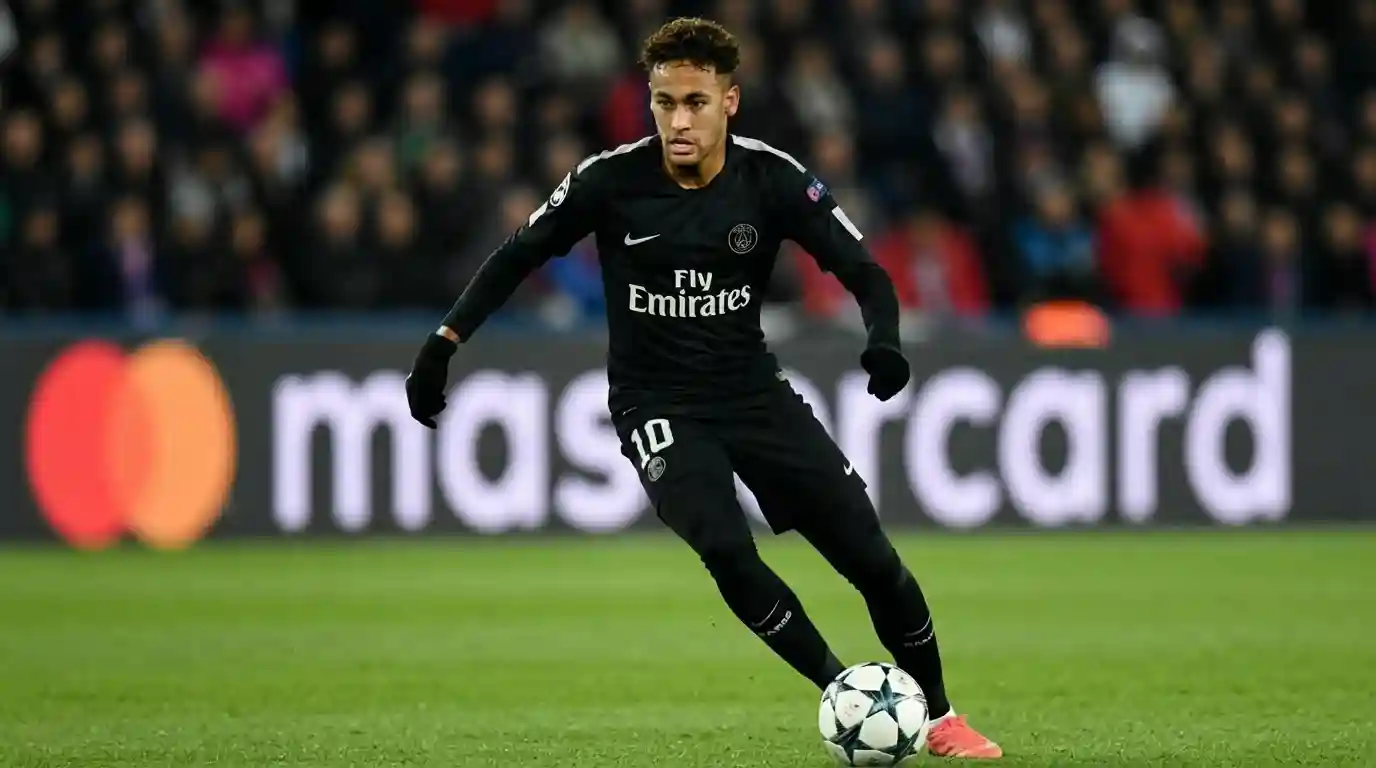
Neymar Jr Leads Barcelona to a Historic 6-1 Victory Over PSG in La Remontada
| Neymar Jr Biography | Details |
|---|---|
| Full Name | Neymar da Silva Santos Júnior |
| Date of Birth | 5 February 1992 (Mogi das Cruzes, Brazil) |
| Height / Weight | 1.75 m (5 ft 9 in) / 68 kg |
| Position | Left Winger / Attacking Midfielder |
| Club at Time of Match | FC Barcelona (2013–2017), Shirt No. 11 |
| National Team | Brazil (all-time top scorer, 79 goals) |
| 2016–17 Season Line | 20 goals across all competitions |
| Career Path | Santos → Barcelona → PSG → Al Hilal → Santos (2025 return) |
| Major Honours | 1x Champions League (2015), 2x La Liga, Olympic Gold (2016) |
The Hook: Trailing 4-0 from the first leg and seemingly buried at 3-1 on the night, Neymar Jr scored in the 88th minute, converted a stoppage-time penalty and delivered the assist for the 95th-minute winner to drag Barcelona into the quarter-finals.
The Lead
On 8 March 2017, a crowd of 96,290 packed into Camp Nou in Barcelona, Spain, for the second leg of the 2016–17 UEFA Champions League Round of 16 between FC Barcelona and Paris Saint-Germain. Barcelona won the match 6-1, completing a 6-5 aggregate victory that overturned a 4-0 first-leg defeat at the Parc des Princes — a deficit no club had ever reversed in the competition’s history. Kick-off came at 20:45 local time, with German referee Deniz Aytekin in charge, and the match was settled by three goals in the final seven minutes.
The game was won through relentless early pressure and late individual brilliance from Neymar. Luis Suárez opened the scoring inside three minutes, a Layvin Kurzawa own goal doubled the lead before half-time, and a Lionel Messi penalty made it 3-0 in the 50th minute. Edinson Cavani’s away goal in the 62nd minute left Barcelona needing three goals, before Neymar took over: a curling free kick in the 88th minute, a calmly dispatched penalty in the first minute of added time, and the chipped delivery that Sergi Roberto turned home in the 95th minute to seal what the football world now calls La Remontada.
Match Overview
| Information | Match Details |
|---|---|
| Event | 2016–17 UEFA Champions League, Round of 16 (Second Leg) |
| Game | FC Barcelona vs Paris Saint-Germain |
| Date | 8 March 2017 |
| Venue | Camp Nou, Barcelona, Spain |
| Attendance | 96,290 |
| Winner | FC Barcelona (6–5 on aggregate) |
| Final Score | FC Barcelona 6–1 PSG |
| Broadcast | beIN Sports (Spain/France), BT Sport (UK), Fox Sports & ESPN Deportes (USA) |
Core Match Statistics Overview
The UEFA match record underlines just how one-sided the Barcelona vs PSG player statistics were on the night. Barcelona dominated every volume metric, while PSG’s numbers reflect a team that spent 90 minutes defending its own box.
| Statistic | FC Barcelona | Paris Saint-Germain |
|---|---|---|
| Possession | 75% | 25% |
| Total Shots | 20 | 7 |
| Shots on Target | 10 | 3 |
| Corner Kicks | 6 | 4 |
| Fouls Committed | 16 | 25 |
| Offsides | 2 | 5 |
| Saves | 2 | 4 |
| Yellow Cards | 5 | 5 |
Possession and Field Tilt
- Barcelona held 75% of the ball, turning the match into a prolonged attack-versus-defense exercise that never allowed PSG’s midfield to settle.
- PSG completed long stretches without a single sustained sequence in Barcelona’s half, with their 25% share mostly spent inside their own defensive third.
Shot Volume and Accuracy
- Barcelona produced 20 shots with 10 hitting the target — a 50% on-target rate that forced Kevin Trapp into constant work.
- PSG managed just 7 attempts and 3 on target, meaning Marc-André ter Stegen faced a genuine test only twice before the frantic finale.
Discipline and Foul Differential
- PSG committed 25 fouls to Barcelona’s 16, a nine-foul gap that showed how often the French side arrived late against Barcelona’s quick combinations.
- Both teams collected five yellow cards, but PSG’s fouls in dangerous zones directly produced the Neymar free kick goal and the stoppage-time penalty.
Set-Piece and Dead-Ball Pressure
- Barcelona won 6 corners to PSG’s 4 and converted two penalties plus one direct free kick, meaning half of their six goals came from dead-ball situations.
- PSG’s 5 offsides against Barcelona’s 2 reveal how predictable their counterattacks became against Barça’s well-drilled high line.
Period-by-Period Analysis
First Half: Barcelona Strike Early and Control Everything
| Minute | Goalscorer | Score (Night) | Aggregate |
|---|---|---|---|
| 3′ | Luis Suárez | 1–0 | PSG 4–1 |
| 40′ | Layvin Kurzawa (OG) | 2–0 | PSG 4–2 |
| Half-Time | — | 2–0 | PSG 4–2 |
- Suárez pounced after Trapp flapped at a third-minute ball into the box, and the early strike immediately flipped the psychological pressure onto PSG.
- Barcelona’s front five pressed PSG’s back line into repeated errors, with the visitors surviving several goalmouth scrambles before the break.
- Neymar’s inswinging delivery forced panic again in the 40th minute, when Kurzawa’s attempted clearance spun into his own net for 2-0.
Second Half: Cavani’s Dagger, Then the Seven-Minute Miracle
| Minute | Goalscorer | Score (Night) | Aggregate |
|---|---|---|---|
| 50′ | Lionel Messi (pen) | 3–0 | PSG 4–3 |
| 62′ | Edinson Cavani | 3–1 | PSG 5–3 |
| 88′ | Neymar (free kick) | 4–1 | PSG 5–4 |
| 90+1′ | Neymar (pen) | 5–1 | 5–5 |
| 90+5′ | Sergi Roberto | 6–1 | Barcelona 6–5 |
- Messi converted from the spot after Thomas Meunier stumbled into Neymar, but Cavani’s 62nd-minute strike meant Barcelona needed three goals in 28 minutes.
- Barcelona’s chance count kept climbing while PSG’s defensive line sank deeper, and ter Stegen’s crucial one-on-one stop from Cavani at 3-1 kept the comeback mathematically alive.
- Neymar then authored the most famous seven minutes of his career: free kick, penalty, and the measured chip over PSG’s shell-shocked back line that Sergi Roberto stabbed home at 94:39.
FC Barcelona Player Statistics
The Neymar Jr stats from this match remain his signature Champions League performance. Below are the four Barcelona players who shaped the result.
Neymar Jr — Left Wing
| Stat | Value |
|---|---|
| Goals | 2 (88′ free kick, 90+1′ penalty) |
| Assists | 1 (90+5′ Sergi Roberto) |
| Minutes | 90 |
| Bookings | Yellow card (64′) |
Neymar was directly involved in three of the six Barcelona goals, all inside the final seven minutes, and his delivery also created the chaos behind the opening goal and the Kurzawa own goal. His willingness to demand the ball at 5-4 down, with the stadium holding its breath, separated this from every other Neymar Champions League performance.
Lionel Messi — Attacking Midfield
| Stat | Value |
|---|---|
| Goals | 1 (50′ penalty) |
| Minutes | 90 |
| Key Contribution | Constant between-the-lines threat against a back five |
Messi’s penalty conversion at 3-0 pulled the aggregate deficit to a single goal and kept Camp Nou at full volume before Cavani’s reply. Even without dominating the scoresheet, his movement pinned two PSG midfielders deep and opened the left channel Neymar attacked all night.
Luis Suárez — Centre Forward
| Stat | Value |
|---|---|
| Goals | 1 (3′) |
| Penalty Won | 1 (90+1′) |
| Bookings | Yellow card (67′) |
Suárez set the emotional tone by scoring inside three minutes, attacking Trapp’s uncertainty with a trademark poacher’s header. His stoppage-time run drew the contact from Marquinhos that produced the equalizing penalty on aggregate, a moment of pure striker’s instinct.
Sergi Roberto — Substitute Right Midfielder
| Stat | Value |
|---|---|
| Goals | 1 (90+5′) |
| Minutes Played | 19 (entered 76′) |
| Touches in Box | Match-winner at 94:39 |
Introduced for Rafinha with 14 minutes left, Roberto made one decisive run beyond the defensive line and finished Neymar’s cross with the outside of his boot. It was his only goal of the season and the most consequential touch of the entire European campaign.
Paris Saint-Germain Player Statistics
The PSG numbers tell the story of talented players overwhelmed by game-state pressure after Cavani’s away goal.
Edinson Cavani — Centre Forward
| Stat | Value |
|---|---|
| Goals | 1 (62′) |
| Big Chance Missed | 1 (saved one-on-one at 3-1) |
| Tie Impact | PSG’s only scorer across the final 88 minutes |
Cavani’s composed finish should have killed the tie, and he nearly added a second away goal minutes later, only for ter Stegen to smother the one-on-one. That missed moment now stands as the sliding-doors play of the entire night for PSG.
Kevin Trapp — Goalkeeper
| Stat | Value |
|---|---|
| Saves | 4 |
| Goals Conceded | 6 |
| Error Leading to Goal | 1 (3′, flapped clearance) |
Trapp faced 10 shots on target and made four legitimate saves, so the scoreline flatters him less than the raw numbers suggest. His early handling error, though, gifted Suárez the opener and infected PSG’s defensive confidence for the rest of the evening.
Layvin Kurzawa — Left Back
| Stat | Value |
|---|---|
| Own Goals | 1 (40′) |
| Defensive Role | Constant 1v1 exposure against Barcelona’s right overloads |
Kurzawa’s own goal arrived while twisting to clear a Neymar-driven wave of pressure, the kind of forced error the hosts manufactured all night. He spent the second half pinned inside his own penalty area and never managed a single forward contribution.
Marquinhos — Centre Back
| Stat | Value |
|---|---|
| Penalty Conceded | 1 (90+1′ on Suárez) |
| Bookings | Yellow card (90′) |
| Clearance Load | Highest on PSG under 75% possession against |
Marquinhos read the game well for 89 minutes, but his challenge on Suárez in stoppage time handed Neymar the penalty that leveled the tie on aggregate. In a match decided by millimeters of discipline, that single moment defined his night.
Statistical Leaders Summary
| Category | FC Barcelona | Paris Saint-Germain |
|---|---|---|
| Leading Scorer | Neymar (2 goals) | Edinson Cavani (1 goal) |
| Second Leading Scorer | Messi / Suárez / S. Roberto (1 each) | Kurzawa OG (no second scorer) |
| Top Rebounder/Defense | ter Stegen (2 saves, big stop at 3-1) | Kevin Trapp (4 saves vs 10 SoT) |
| Most Assists/Playmaker | Neymar (1 assist, 3 goal involvements) | None recorded (1 goal, 0 assists) |
Analytical Breakdown: Why Barcelona Won / Why PSG Lost
Why Barcelona Won
Relentless Shot Volume and Conversion at Home
| Metric | Barcelona | PSG |
|---|---|---|
| Total Shots | 20 | 7 |
| Shots on Target | 10 | 3 |
| Shot Conversion | 30% | 14% |
| On-Target Conversion | 60% | 33% |
Barcelona scored once every 3.3 shots, a finishing clip PSG never approached. Ten shots on target in a Champions League knockout match against a back line featuring Thiago Silva and Marquinhos is elite volume, and it guaranteed that Trapp could not hold the tide forever.
Neymar Goals and Assists in the Decisive Window
| Window | Neymar Involvement | Result |
|---|---|---|
| 88′ | Direct free kick | 4–1, hope restored |
| 90+1′ | Penalty converted | 5–5 on aggregate |
| 90+5′ | Assist to Sergi Roberto | 6–5 aggregate lead |
No player in the modern knockout era has stacked three goal involvements into the final seven minutes of a tie of this magnitude. The Neymar free kick technique — over the wall, inside the near post — broke PSG’s resistance, and everything after felt inevitable.
Set-Piece and Penalty Execution
| Dead-Ball Type | Barcelona | PSG |
|---|---|---|
| Penalties Scored | 2 (Messi 50′, Neymar 90+1′) | 0 |
| Direct Free Kick Goals | 1 (Neymar 88′) | 0 |
Half of Barcelona’s goals came from dead balls, the product of PSG committing 25 fouls in exposed areas. Barcelona practiced exactly this scenario — Messi and Neymar split the spot-kick duties and both delivered without hesitation.
Possession Stranglehold and Territorial Pressure
Seventy-five percent of the ball meant PSG never strung together the possession sequences needed to run down the clock. Barcelona’s 6 corners and PSG’s 5 offsides confirm the pattern: wave after wave of structured attacks against a retreating block.
Why PSG Lost
Shell-Shocked Game Management After the Away Goal
Cavani’s 62nd-minute strike gave PSG a 5-3 aggregate cushion with an away goal banked. From that moment they produced zero shots on target, retreated 20 yards deeper, and conceded three goals in seven minutes — a total failure of game management from a squad built to win the competition.
Individual Errors in the Defensive Third
| Error | Minute | Consequence |
|---|---|---|
| Trapp flaps at cross | 3′ | Suárez goal |
| Kurzawa own goal | 40′ | 2–0 |
| Meunier trips into Neymar | 50′ | Messi penalty |
| Marquinhos challenge on Suárez | 90+1′ | Neymar penalty |
Four of Barcelona’s six goals trace directly to a PSG mistake. Pressure statistics only partly capture it: errors of this type compound when a team defends its area for 75% of a match.
Heavy Dependence on a Counterattack That Never Came
PSG generated 7 shots, zero assists and just one open-play goal. Once Barcelona corrected the spacing issues that destroyed them in Paris, PSG had no Plan B — Di María’s late breakaway miss summed up a side that created almost nothing after the hour mark.
Historical Context & Advanced Insights
Season Series and Recent Head-to-Head
| Date | Fixture | Competition Stage | Score |
|---|---|---|---|
| 30 Sep 2014 | PSG vs Barcelona | UCL Group Stage | PSG 3–2 |
| 10 Dec 2014 | Barcelona vs PSG | UCL Group Stage | Barcelona 3–1 |
| 15 Apr 2015 | PSG vs Barcelona | UCL Quarter-Final, Leg 1 | Barcelona 3–1 |
| 21 Apr 2015 | Barcelona vs PSG | UCL Quarter-Final, Leg 2 | Barcelona 2–0 |
| 14 Feb 2017 | PSG vs Barcelona | UCL Round of 16, Leg 1 | PSG 4–0 (Di María 2, Draxler, Cavani) |
| 8 Mar 2017 | Barcelona vs PSG | UCL Round of 16, Leg 2 | Barcelona 6–1 |
Across the six meetings before this tie, Barcelona had won three of four knockout legs against PSG — which explains why a 4-0 cushion still felt fragile inside the Paris squad. The first leg remains PSG’s only clean sheet in this head-to-head run.
Advanced Statistical Insights
The efficiency gap, not the possession gap, technically settled this tie. Barcelona converted 30% of their 20 shots, triple PSG’s 14.3% rate, and their 10 shots on target from 20 attempts (50% accuracy) versus PSG’s 3 from 7 (43%) meant volume and precision moved in the same direction for only one side. When you adjust for game state, the numbers get wilder: after the 88th minute, Barcelona scored 3 goals from their final four efforts, a finishing burst that no expected-goals model prices in.
Neymar’s personal efficiency profile explains his gravity in this match. He touched the scoresheet once every 30 minutes on average (3 involvements in 90), but the clustering matters more than the average: all three arrived when the tie was effectively lost, giving his performance a pressure-adjusted value beyond any standard rating. His goal involvement share hit 50% of Barcelona’s output — the kind of single-player load normally seen in group-stage blowouts, not Round of 16 deciders. Set-piece dependency is the quieter takeaway: Barcelona’s two penalties and one direct free kick supplied exactly half their goals, so any analysis of the 6-1 has to credit foul-drawn territory (25 PSG fouls) as the hidden engine of the comeback.
Game Implications & Key Lessons
What This Means for Barcelona
- The win booked a quarter-final place and restored the MSN era’s aura, even though Barcelona fell 3-0 on aggregate to Juventus in the next round and never repeated this European peak together.
- It proved the 3-4-3 pressing structure Luis Enrique introduced could overwhelm elite opposition, validating the system for the run-in of the season.
- Neymar’s takeover accelerated his case as Messi’s heir, a narrative strong enough that PSG triggered his €222 million release clause that August — still the world transfer record.
What This Means for PSG
- Conceding three goals in seven minutes triggered a full sporting review under Unai Emery and hardened the club’s resolve to buy serial winners rather than develop them.
- The collapse directly fueled the Neymar pursuit and the subsequent Mbappé loan deal, reshaping the entire transfer market’s price ceiling within months.
- Defensively, PSG learned that four senior errors in one match erase 180 minutes of dominance — a lesson in depth and composure their recruitment chased for years.
Key Lessons From the Match
- Early goals reshape aggregate math: Suárez’s third-minute strike turned a four-goal mountain into a winnable two-goal climb before PSG settled.
- Star players must dominate decisive windows — Neymar produced 2 goals and 1 assist across just seven minutes when the tie demanded it.
- Dead-ball discipline wins knockouts: Barcelona scored three of six from set plays because PSG committed 25 fouls in dangerous zones.
- Possession without penetration protects nothing, yet PSG’s 25% share was all static — field tilt matters more than raw possession.
- A single saved chance can swing a tie: ter Stegen’s one-on-one stop from Cavani at 3-1 kept the comeback mathematically possible.
- Squad players decide history; Sergi Roberto’s 19-minute cameo produced the winner, rewarding coaches who trust structure over star names late in games.
Frequently Asked Questions
Who won Barcelona vs PSG on 8 March 2017?
FC Barcelona won the match 6-1 at Camp Nou and advanced 6-5 on aggregate, overturning a 4-0 first-leg defeat — the largest comeback in UEFA Champions League knockout history.
What were Neymar Jr’s stats in the La Remontada match?
Neymar Jr finished with 2 goals (an 88th-minute free kick and a 90+1′ penalty), 1 assist for Sergi Roberto’s 95th-minute winner, and 3 direct goal involvements in the final seven minutes.
Who scored the most goals in Barcelona 6-1 PSG?
Neymar was the only player to score twice. Messi, Suárez and Sergi Roberto scored once each for Barcelona, plus a Kurzawa own goal, while Cavani scored PSG’s only goal.
What was the attendance at Camp Nou for the match?
The official attendance was 96,290, one of the largest crowds in Camp Nou’s history for a European night.
What was the aggregate score of the tie?
Barcelona won 6-5 on aggregate after losing the first leg 4-0 in Paris, with Neymar central to the record-breaking turnaround.
Where was Barcelona vs PSG broadcast live?
The match aired on beIN Sports across Spain and France, BT Sport in the United Kingdom, and Fox Sports and ESPN Deportes in the United States.
Conclusion
Barcelona 6-1 PSG endures because the story matches the spreadsheet: 75% possession, 20 shots, three dead-ball goals, and one player producing three goal involvements in the match’s final seven minutes. Neymar Jr did not just win this game; he compressed an entire career highlight reel into its closing stretch, and every efficiency metric on the night backed the eye test. PSG’s individual quality was never in doubt, but four defensive errors, 25 fouls and zero second-half control show exactly how collective pressure beats individual talent in knockout football. For anyone studying Neymar Jr stats, player-by-player data or pure Champions League history, La Remontada remains the definitive case study in efficiency and teamwork outpacing reputation.