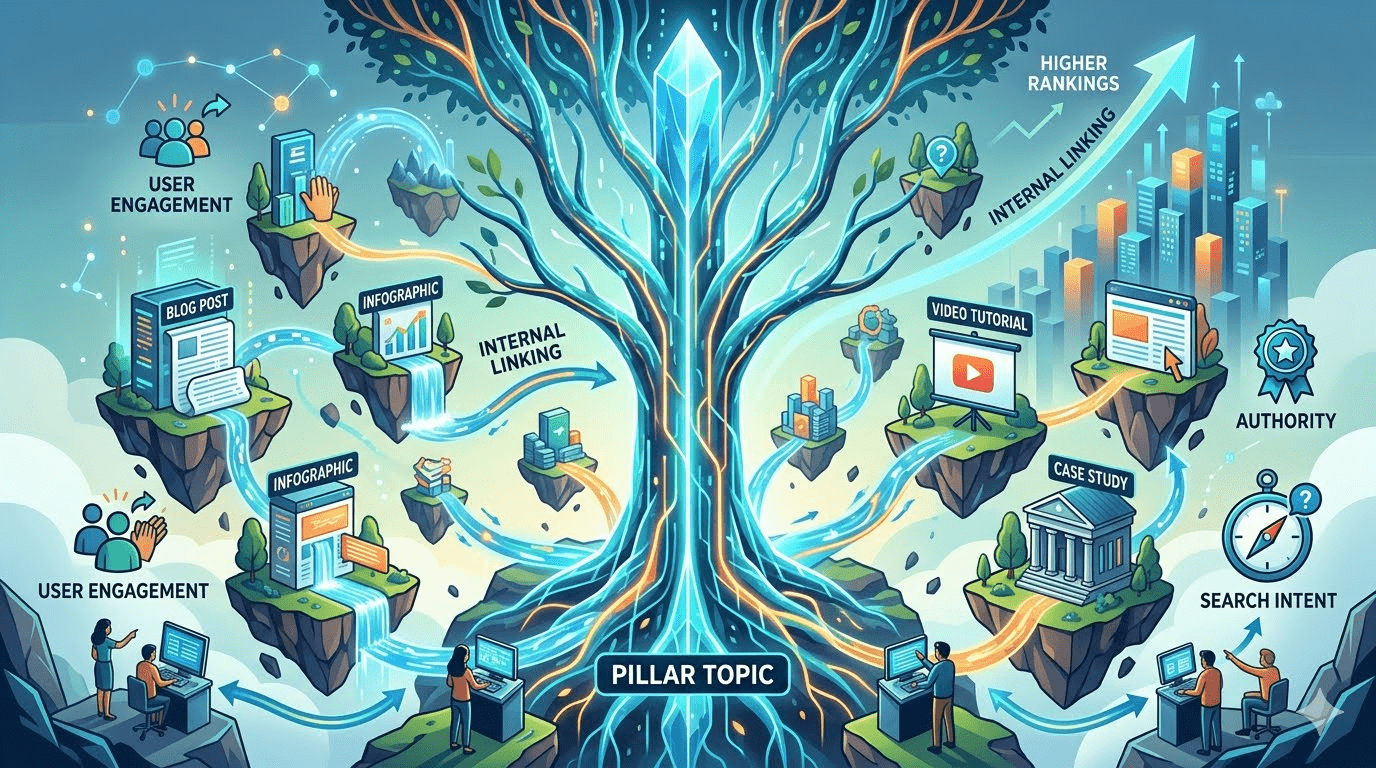
Your Topics | Multiple Stories: Organize & Rank Higher
There are numerous incomplete drafts in your folder. Every topic feels like a lonely island. Visitors click away because nothing ties together. The fix sits right in front of you. The Your Topics | Multiple Stories method shows you how to turn one big idea into a series of connected narratives that pull readers deeper and make search engines pay attention.
The Significance of Your Topics | Multiple Stories
Your Topics | Multiple Stories is a content architecture. You pick one core subject you want to own, then deliberately spin out distinct story angles that all point back to that central idea. A retirement planner might craft five stories around the same core topic—tax traps, late-start success, real estate inside an IRA, fear of running out, and a calculator walkthrough. Each piece lives on its own. Together, they form a tight circle of proof that you cover the whole problem, not just a sliver.
Why Single-Story Publishing Weakens Your Authority
Publishing one post per topic and never returning to it starves your site of depth. Search engines look for sustained, connected coverage. When your articles stand alone with no clear relationship, crawlers treat each as a thin entry. Readers sense the emptiness too. They get a quick answer and leave. With Your Topics | Multiple Stories, you cluster related pieces so a visitor hungry for detail moves from one page to the next naturally. This behavior signals to Google that your site satisfies a full information need.
A Painless Way to Map Your Topics Into Multiple Stories
Start with a whiteboard or a blank doc. Place your main topic in the center. Draw five spokes outward. Label each spoke with a different person’s problem, a different “what if,” or a different format. A parenting blog focusing on toddler sleep might spin out:
- A pediatric sleep consultant’s daily routine.
- A data roundup of sleep training success rates.
- A former exhausted mom’s personal timeline.
- A crib versus floor bed comparison.
- A quick-reference chart of nap windows by age.
Every spoke keeps the main topic visible while attacking a fresh angle. No story repeats another.
Your Topics | Multiple Stories: The 3-Part Framework
I build every cluster with three layers. This table makes the structure visible at a glance.
| Layer | Role | Example for “Meal Prep” | Refresh Cycle |
|---|---|---|---|
| Anchor Page | The big, authoritative resource that covers the topic broadly | “The Complete Guide to Weekly Meal Prep” | Every 6 months |
| Story Threads | Individual deep dives that tackle specific angles | “5 Ingredient Prep for Busy Parents,” “Freezer-Friendly Breakfast Burritos,” “How a Chef Plans 3 Days of Meals” | Every 4 months |
| Connecting Nodes | Short, link-heavy pieces that bridge threads and answer narrow questions | “Can You Prep Salads Without Wilting?,” “Best Containers Under $20” | As needed |
The anchor page links to every thread. Threads link back to the anchor and across to sibling stories. This internal weave keeps authority flowing.
Creating a Schedule That Maintains Your Topics | Several Narratives on Course Put your primary subject in the middle.
A chaotic calendar kills the method. Assign one core topic per month. Break each month into four weeks, and give every week its own story angle. Week one might be a “how-to” thread. Week two delivers a case study. Week three answers a controversial question. Week four curates expert quotes. Leave the last two days of the month for updating older links and adding fresh stats. This rhythm removes decision fatigue and guarantees steady, connected output.
How to Link Story Threads Without Jarring the Reader
Forced links annoy. Contextual bridges feel like a helpful friend. When you finish a story on soil preparation, end with a sentence that plants curiosity about composting. In the composting story, raise a question that only the pest control thread answers. Write a 25-word transition that carries the reader forward without a hard sell. Use anchor text that describes exactly what they will learn next. This technique keeps session times climbing because every page hands off to the next logical step.
Actual Example: How Your Topics Were Used by a Local Bakery | Multiple Stories
A small sourdough bakery in Portland wanted to rank for “sourdough starter.” Instead of one post, they built a cluster. The anchor page explained the science of wild yeast. Story threads covered:
Rescuing a neglected starter.
- High-hydration dough handling with photos.
- A day in the life of the head baker.
- Scoring patterns that improve oven spring.
Gluten sensitivity and long fermentation myths.
Every thread linked back to the main sourdough guide and mentioned the bakery’s flour blend in context. Organic visits to the online shop tripled in five months because the cluster answered every possible sourdough question a home baker could type.
Two Costly Mistakes in Your Topics | Multiple Stories (and Quick Fixes)
Mistake: Creating hollow variations. Changing the title but recycling the same advice fools no one.
Fix: Before you write, define the one specific question this piece answers that no other thread has touched.
Mistake: Letting stories go stale. An outdated stat or a broken link damages trust fast.
Fix: Put a four-month review deadline on your calendar for every thread. Swap old examples, add recent data, and tighten the internal links.
Key Metrics for Your Topics | Multiple Stories Success
Ignore total pageviews alone. Watch behavioral signals that show the cluster is working:
- Pages per session rising specifically for users entering through a story thread.
- Returning visitor percentage on the anchor page.
- Click-through rate on internal suggestion links inside each post.
- Anchor page ranking improvements for the primary keyword as topical authority builds.
A rising cluster boosts every page inside it, not just the hero piece.
Scaling Your Topics | Multiple Stories with Guest Writers
When you bring in other writers, hand them a precise lane. Provide a brief that names the exact story angle, the three internal links they must include, and the transition sentence they need to write toward the next piece. A small detail guide that explains the cluster map saves editing hours. New voices add freshness without breaking the structure because the framework keeps everyone aligned.
Your Topics | Multiple Stories and the AI Overview Shift
AI-generated search summaries pull from sources that cover a subject end to end. When your site connects a dozen pieces around one central topic with clear internal signals, AI overviews are far more likely to cite your pages. The Your Topics | Multiple Stories approach creates exactly the kind of comprehensive, interlinked resource that machine learning models recognize as a trustworthy answer hub.
Your Quick Start Checklist
Pick one topic you can realistically dominate.
- Write down five distinct story angles that different readers would ask about.
- Publish a solid anchor page (1,500+ words) first.
- Draft three story threads and link them to the anchor page immediately.
- Set a calendar reminder to add two more threads and refresh old ones within 60 days.
Track one behavioral metric per cluster to measure growth.
Frequently Asked Questions
1. Can Your Topics | Multiple Stories work for a service business?
Yes. A plumber might cluster around “slab leak repair” with stories covering detection methods, insurance guidance, temporary fixes, and homeowner case studies. Every story calls back to the main service page naturally.
2. How many stories should I create per topic?
Start with five. Five well-linked threads signal enough depth for search engines without overwhelming a small team. Add more based on search console queries that show missing angles.
3. Do I need an anchor page before writing the stories?
Publishing the anchor first gives all future threads a central home. Starting with a thin anchor and enriching it later works, but having it live anchors the whole cluster from day one.
4. Won’t multiple stories on one topic sound repetitive?
Only if angles blur. Keep a rigid one-takeaway-per-story rule. If two outlines overlap, merge them into a single, stronger piece.
5. How fast will Your Topics | Multiple Stories improve rankings?
Most clusters show clear movement within three to six months when internal linking is tight and each piece genuinely fills a reader gap.
6. Can I apply this to video or podcast content?
Absolutely. Record a long-form pillar episode, then spin out shorter clips, interviews, and Q&A sessions. Link to the transcript page so search engines can follow the same cluster map.
Conclusion
Your scattered ideas hold more power than you think. They just need a framework that connects them into a single, undeniable resource. Grab your core topic right now. Map five story angles and publish the anchor page this week. Every connected piece you add builds a moat around your authority that competitors will struggle to cross.
Written by a content strategist who has mapped over 200 topic clusters for brands across health, finance, and retail.