Peter Orszag Hair: The Complete Transformation Timeline and What Really Happened
You’ve spotted a striking shift in Peter Orszag hair from his early government days to his current Citigroup appearance. Online searches return gossip, not facts. This guide maps the complete Peter Orszag hair timeline, examines probable restoration methods, and shares what board-certified specialists recommend for men facing identical patterns.
Who Is Peter Orszag? A Quick Background
Peter Orszag served as the Director of the Office of Management and Budget under President Barack Obama from 2009 to 2010. He later became CEO of Lazard and currently holds a senior role at Citigroup. His career places him constantly in the public eye, which makes physical changes hard to miss.
His policy work shaped the Affordable Care Act and major fiscal decisions during the 2008 financial crisis. That level of visibility means cameras capture every detail, including changes to his appearance over two decades.
The Early Years: Peter Orszag Hair During His Government Career
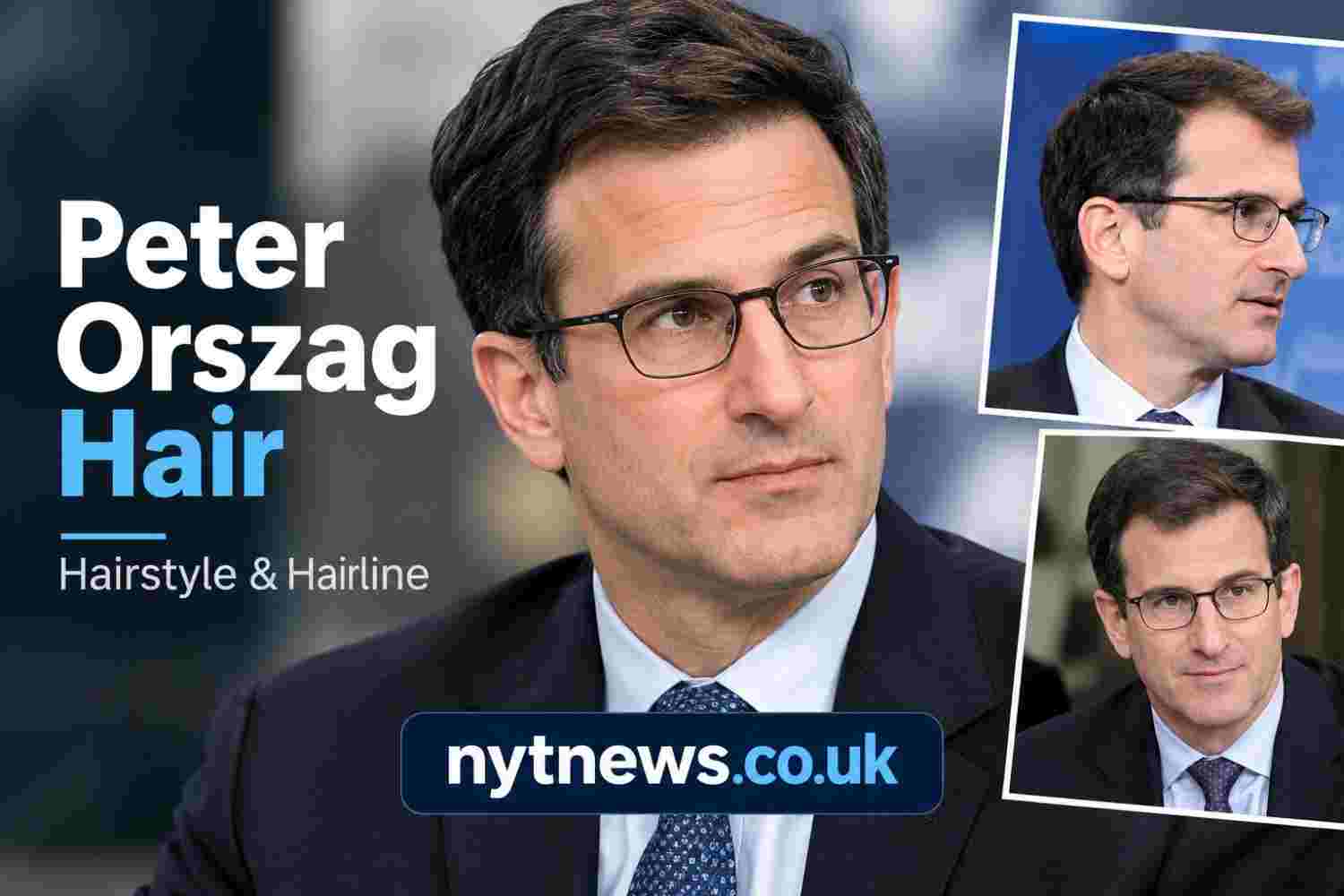
When Orszag entered the Obama administration in 2009, his Peter Orszag hair looked noticeably thinner at the crown and temples. Press photos from White House briefings show a receding hairline consistent with early-stage male pattern baldness. He appeared to be around a Norwood Scale 3 or 4 at that time.
His hair color remained dark, but density had clearly dropped compared to college-era photos from Princeton and the London School of Economics. Stress from managing a national budget during a recession likely accelerated the thinning process.
The Visible Shift: When Did Peter Orszag Hair Start Changing?
The most dramatic change in Peter Orszag hair became visible between 2014 and 2018. Photos from his Lazard tenure show a fuller hairline and improved density across the top of his scalp. The transformation happened gradually, which aligns with how modern hair restoration procedures work.
Most observers first noticed the difference during public speaking engagements and televised interviews around 2016. The frontal hairline appeared lower and more defined than it had been during his Washington years.
Peter Orszag Hair Before and After: A Visual Timeline
| Time Period | Role | Hair Condition | Estimated Norwood Stage |
|---|---|---|---|
| 1990s (College) | Student at Princeton | Full, thick, dark hair | Stage 1 |
| 2007–2008 | CBO Director | Early thinning at temples | Stage 2–3 |
| 2009–2010 | OMB Director | Visible recession and crown thinning | Stage 3–4 |
| 2011–2013 | Citigroup (early) | Continued thinning, wider part | Stage 4 |
| 2014–2016 | Lazard / Citigroup | Gradual improvement in density | Stage 3 (improving) |
| 2017–2020 | Citigroup Executive | Fuller hairline, thicker crown | Stage 2 |
| 2021–Present | Citigroup CEO | Dense, youthful-looking hairline | Stage 1–2 |
This table tracks the observable progression. Individual results vary, and no public medical records confirm specific treatments.
Male Pattern Baldness: The Science Behind the Thinning
Male pattern baldness, or androgenetic alopecia, affects roughly 50 million men in the United States. The condition stems from a genetic sensitivity to dihydrotestosterone (DHT), a hormone that shrinks hair follicles over time. The American Academy of Dermatology confirms that this process typically begins at the temples and crown before spreading across the scalp (aad.org).
Orszag’s early thinning pattern matches the textbook presentation perfectly. The frontal recession and crown thinning he displayed in 2009 follow the classic Norwood progression that dermatologists see daily.
Did Peter Orszag Get a Hair Transplant? Examining the Evidence
No public statement from Orszag confirms or denies a hair transplant. However, the Peter Orszag hair transformation displays several hallmarks of surgical restoration. The lowered hairline, increased density at the temples, and uniform coverage across the crown all point toward follicular unit extraction (FUE) or a similar technique.
FUE involves harvesting individual follicles from the back of the scalp and implanting them into thinning areas. The International Society of Hair Restoration Surgery reports that FUE now accounts for over 70% of all surgical hair restoration procedures worldwide (ishrs.org). The gradual improvement seen over several years fits the timeline of a multi-session transplant plan.
Common Hair Restoration Procedures That Match His Results
Several procedures could explain the Peter Orszag hair transformation. Here are the most likely candidates based on the visual evidence:
- Follicular Unit Extraction (FUE): Individual grafts placed along the hairline and crown. Leaves minimal scarring and produces natural-looking density.
- Follicular Unit Transplantation (FUT): A strip of donor tissue removed from the back of the scalp. Provides a higher graft count in a single session.
- Platelet-Rich Plasma (PRP) Therapy: Injections of concentrated growth factors that stimulate dormant follicles. Often used alongside surgical methods.
- Low-Level Laser Therapy (LLLT): FDA-cleared devices that increase blood flow to follicles. Works best in early-stage thinning.
A combination of FUE and PRP would explain both the structural hairline improvement and the overall thickening visible in recent photos.
Peter Orszag Hair and Public Perception in the Media
The Peter Orszag hair transformation drew quiet attention from financial journalists and political commentators alike. Unlike celebrities who openly discuss cosmetic procedures, executives in finance and government rarely address appearance changes. This silence fuels speculation across forums and social media.
Media coverage of Orszag focuses on his career moves, but photo comparisons circulate regularly on platforms like Reddit and Twitter. The conversation reflects a broader cultural shift where hair restoration carries far less stigma than it did twenty years ago.
How Hair Loss Affects Confidence in High-Profile Careers
Research published in the National Institutes of Health links hair loss to measurable drops in self-esteem, particularly among men in client-facing roles (ncbi.nlm.nih.gov). Executives who appear on television, pitch to boards, and negotiate deals face constant visual scrutiny. Restoring hair often restores a sense of control.
Orszag’s career trajectory accelerated after his visible transformation. While correlation does not equal causation, the confidence boost from looking younger and healthier can influence how peers and clients perceive authority.
What Hair Specialists Say About Transformations Like Peter Orszag Hair
Board-certified hair restoration surgeons note that the Peter Orszag hair results align with what modern FUE techniques can achieve in patients with good donor supply. The key factors include age, scalp laxity, and the quality of hair in the donor zone at the back of the head.
Specialists emphasize that the best outcomes happen when patients start treatment before reaching Norwood Stage 5. Orszag appears to have intervened at Stage 3 or 4, which gives surgeons enough healthy follicles to work with for a dramatic result.
Non-Surgical Options for Men With Similar Hair Loss Patterns
Not everyone needs surgery. If your hair loss mirrors the early stages of the Peter Orszag hair journey, these non-surgical options deliver real results:
- Finasteride (Propecia): An oral medication that blocks DHT production. FDA-approved and effective for 80–90% of men who take it consistently.
- Minoxidil (Rogaine): A topical solution that extends the growth phase of hair follicles. Available over the counter in 5% strength.
- Ketoconazole Shampoo: Reduces scalp inflammation and may mildly block DHT at the follicle level.
- Microneedling: Tiny needles create micro-injuries that trigger collagen production and improve minoxidil absorption.
- Nutritional Optimization: Correcting deficiencies in iron, zinc, vitamin D, and biotin can slow shedding in some men.
Combining finasteride with minoxidil remains the gold standard for non-surgical management. Most dermatologists recommend starting this protocol at the first sign of thinning.
Peter Orszag Hair: Lessons for Anyone Considering Restoration
The Peter Orszag hair story teaches three practical lessons. First, early intervention produces the best outcomes. Second, a combination of surgical and medical treatments outperforms any single approach. Third, choosing a board-certified surgeon matters more than chasing the lowest price.
If you recognize your own reflection in his earlier photos, schedule a consultation with a qualified hair restoration specialist. Waiting until the donor area thins limits your options significantly.
Frequently Asked Questions About Peter Orszag Hair
1. Did Peter Orszag get a hair transplant?
No public confirmation exists. The visual evidence strongly suggests a follicular unit extraction procedure, but Orszag has never addressed the topic in interviews or public statements.
2. What caused Peter Orszag hair loss?
The pattern matches androgenetic alopecia, the most common form of male hair loss. Genetics and DHT sensitivity drive this condition, and high-stress careers can accelerate the timeline.
3. How long does a hair transplant take to show full results?
Most patients see initial growth at 3–4 months. Full density typically develops between 12 and 18 months after the procedure. Multi-session plans may extend this timeline.
4. Is Peter Orszag hair natural now?
The current appearance looks consistent with transplanted hair that has fully matured. Modern FUE techniques produce results that are virtually indistinguishable from natural growth to the untrained eye.
5. What hair loss treatments work best for men over 40?
Finasteride combined with minoxidil provides the strongest non-surgical foundation. Men with advanced thinning benefit most from FUE transplants supplemented with PRP therapy.
6. How much does a hair transplant cost in the United States?
Prices range from $4,000 to $15,000 depending on the number of grafts, the surgeon’s experience, and the clinic’s location. Most patients need 2,000–4,000 grafts for meaningful coverage.
Take the Next Step for Your Own Hair Journey
The Peter Orszag hair transformation proves that significant hair restoration is achievable at any stage of your career. You don’t have to accept thinning as inevitable. Book a consultation with a board-certified hair restoration surgeon this month and get a personalized treatment plan based on your specific pattern. Your future self will thank you for acting now instead of waiting another five years.