Is the Ford Bronco Sport the Best Compact SUV for Real Adventures?
You want a small SUV that tackles weekend trails yet still handles the school run and grocery runs without a fuss. Most crossovers wear rugged cladding but quit at the first mud puddle or snow drift. The Ford Bronco Sport fixes that gap. It pairs genuine 4×4 grip, smart G.O.A.T. terrain modes, and everyday comfort in one tidy, easy-to-park package.
What Makes the Ford Bronco Sport Different
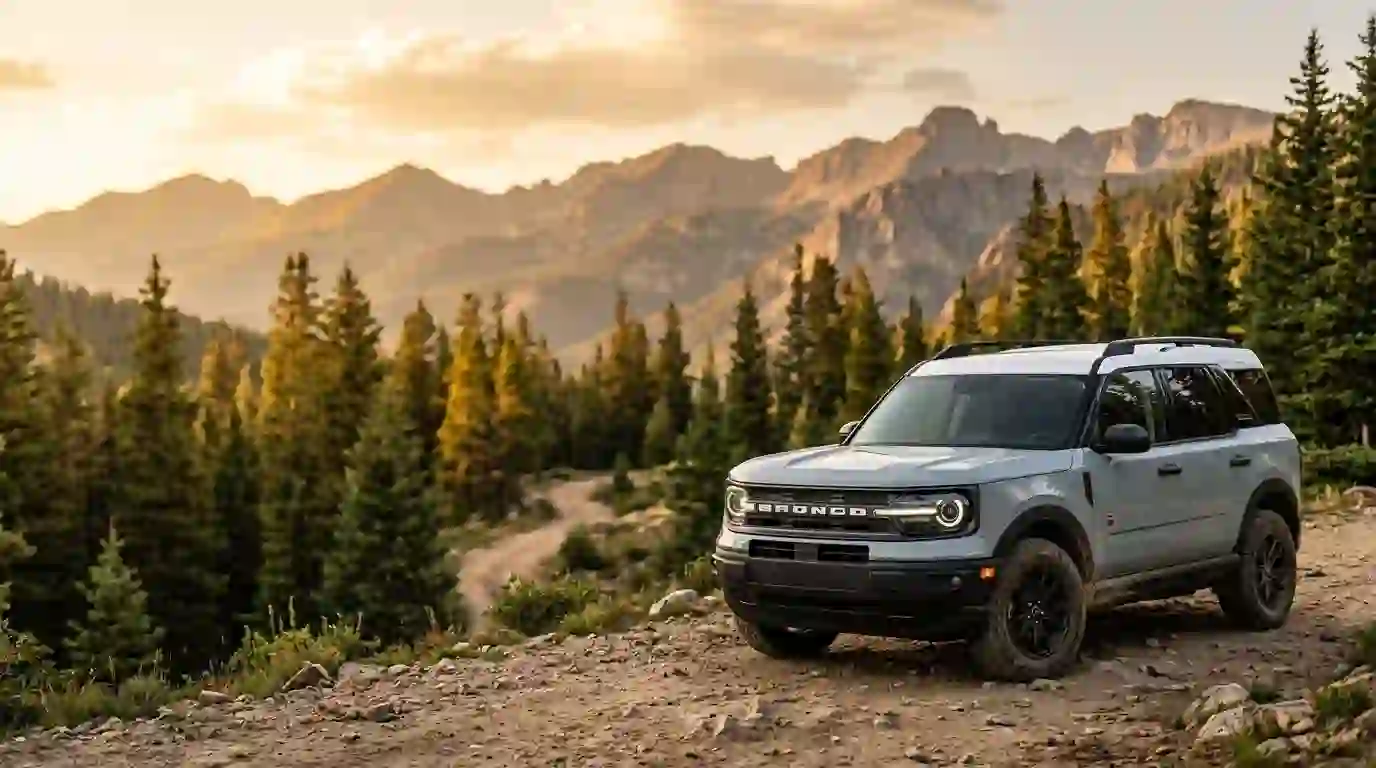
The Ford Bronco Sport stands apart because it was built to leave the pavement, not just look like it might. Ford gave every model standard four-wheel drive, a raised ride height, and skid-plate protection you can actually use. Where a typical compact crossover hides soft underpinnings behind plastic fender flares, this Bronco shares the adventurous spirit of the larger Bronco while keeping the footprint of a city-friendly SUV.
Ford Motor Company designed the lineup around a simple promise: go anywhere, then park anywhere. That philosophy shows in small, thoughtful details. The rear gate swings up instead of out, so you can load cargo on a tight trail. Rubberized switches wipe clean after a muddy day. A built-in liftgate table and bottle openers turn the tailgate into a basecamp. None of these features exist to impress a spec sheet; they exist to solve problems you meet on a real trip.
Ford Bronco Sport Trim Levels and Pricing
Choosing your trim is the first real decision, and the range rewards both budget buyers and serious explorers. Base, Big Bend, Heritage, and Outer Banks trims ride on the efficient 1.5-liter EcoBoost three-cylinder. Badlands and Wildtrak step up to the stronger 2.0-liter EcoBoost four-cylinder for heavier trail work.
| Trim | Starting Price (est.) | Engine | Horsepower | Standout Feature |
|---|---|---|---|---|
| Base | ~$29,000 | 1.5L EcoBoost I-3 | 181 hp | Standard 4×4, 7 G.O.A.T. modes |
| Big Bend | ~$31,000 | 1.5L EcoBoost I-3 | 181 hp | Comfort coil-spring rear suspension |
| Heritage | ~$33,000 | 1.5L EcoBoost I-3 | 181 hp | Retro two-tone exterior paint |
| Outer Banks | ~$34,000 | 1.5L EcoBoost I-3 | 181 hp | Premium cabin with leather seating |
| Badlands | ~$37,000 | 2.0L EcoBoost I-4 | 250 hp | Off-road suspension and rear lock |
| Wildtrak | ~$39,000 | 2.0L EcoBoost I-4 | 250 hp | Trail-focused tune with 29-inch tires |
Prices shift every model year, so confirm the current figure with your local Ford dealer or the official ford.com builder before you sign. The table above reflects typical starting points and helps you compare value at a glance.
Engine Options and Real-World Performance
Two engines cover the whole family. The 1.5-liter EcoBoost three-cylinder makes 181 horsepower and 190 lb-ft of torque. It feels light and eager around town, and it sips fuel gently on the highway. The 2.0-liter EcoBoost four-cylinder lifts output to 250 horsepower and 277 lb-ft of torque, which you notice the moment you climb a steep grade or pass on a two-lane road.
Both engines pair with an eight-speed automatic transmission that shifts smoothly and keeps revs low during cruising. Front struts and a twisting rear beam (or independent setup on Badlands) keep the chassis composed on broken trails. Real-world drivers report that the smaller engine happily manages daily commuting, while the 2.0-liter earns its keep when the trail turns technical or when you tow close to the 2,200-pound limit.
G.O.A.T. Modes Explained
G.O.A.T. stands for “Goes Over Any Type of Terrain,” and it is the brain behind the Bronco’s confidence. You turn a single dial, and the SUV adjusts throttle response, traction control, shifting, and stability systems to match the surface. Base and mid trims carry seven modes: Normal, Eco, Sport, Slippery, Sand, Mud/Ruts, and Rock Crawl.
Each mode does a clear job. Slippery softens power on ice and snow. Sand lets the wheels spin just enough to stay on top of loose ground. Mud/Ruts opens traction control so you can claw through. Rock Crawl slows the throttle for precise, careful crawling over boulders. The system removes guesswork, so a first-time off-roader can drive like someone who has done it for years.
Off-Road Capability and Ground Clearance
Ground clearance ranges from about 7.8 inches on comfort-tuned trims to 8.8 inches on the Badlands and Wildtrak. Those numbers matter because they decide what you can cross without scraping. Approach and departure angles are generous for the class, and the standard 4×4 system sends power to the wheel with the most grip.
The Badlands trim adds a rear locking differential and a suspension lifted for serious terrain. Water fording reaches roughly 17 to 23 inches depending on the model, so seasonal streams and deep puddles stop being a worry. Owners who camp, fish, or hunt praise how the Ford Bronco Sport reaches trailheads that strand lower crossovers.
Interior, Comfort, and Cargo Space
Step inside and the cabin feels upright, airy, and practical rather than flashy. Seats sit high for a clear view of the road, and the dashboard keeps physical controls within easy reach. Soft-touch materials mix with washable surfaces, so a dusty weekend washes off with a quick wipe.
Cargo space measures about 32.5 cubic feet behind the rear seats and expands to roughly 65.2 cubic feet with the seats folded. That swallows camping gear, a stroller, or a week of groceries without complaint. A flat load floor, adjustable rear shelf, and multiple tie-downs keep loose items from rolling. Small touches like a hidden compartment under the floor and a roof-rack-ready roof add everyday flexibility.
Fuel Economy and Ownership Costs
The 1.5-liter model returns about 25 to 26 mpg combined in EPA testing, while the quicker 2.0-liter lands near 23 to 25 mpg combined. Those figures keep the Ford Bronco Sport competitive with other small 4×4 SUVs and far ahead of truck-based alternatives that drink more fuel for the same space.
Ownership stays reasonable. Ford’s standard warranty covers the powertrain for five years or 60,000 miles, and scheduled maintenance is simple thanks to a turbocharged engine that needs no special fuel. Insurance and tires run close to other compact SUVs, though the rugged Wildtrak tires cost more to replace. Budget for those and the total cost of ownership stays friendly.
Safety, Tech, and Driver Assistance
Safety earns strong marks. The NHTSA awards the Bronco Sport a five-star overall rating, and the structure holds up well in independent crash programs. Ford bundles the Co-Pilot360 suite across the range, which includes automatic emergency braking, blind-spot monitoring, lane-keeping assist, and a rearview camera with washer.
Tech feels current without overwhelming. An 8-inch touchscreen runs SYNC 3 with Apple CarPlay and Android Auto on most trims, while higher trims add a larger display, wireless charging, and a Bang & Olufsen audio system. Over-the-air updates keep maps and features fresh. Parents appreciate the rear seat reminder, and travelers like the onboard Wi-Fi that connects phones and tablets on long drives.
Ford Bronco Sport vs the Competition
Shoppers often compare the Bronco Sport with the Jeep Cherokee, Subaru Crosstrek, Mazda CX-30, and Honda HR-V. The Cherokee offers true off-road trims but costs more and drinks fuel faster. The Subaru Crosstrek brings standard all-wheel drive and strong reliability yet trails on power and towing. The Mazda CX-30 feels premium and sporty but lacks the Bronco’s ground clearance and trail modes. The Honda HR-V wins on cabin room but stays firmly on pavement.
The Bronco Sport claims the sweet spot. It matches the Crosstrek’s everyday manners, beats car-based rivals off-road, and undercuts the Cherokee’s price. If your life splits between commuting and weekend escapes, few rivals balance both worlds as cleanly.
Who Should Buy the Ford Bronco Sport
This SUV fits a clear buyer. Outdoor families want one vehicle for soccer practice and state-park weekends. New off-roaders gain confidence from G.O.A.T. modes without buying a harder-core truck. City drivers love the compact size and high seating. Snow-belt residents value standard 4×4 when winter hits.
Skip it if you need three rows, a heavy towing rig, or the lowest possible price. A used sedan or a smaller front-wheel-drive crossover costs less and serves pure city duty. But once your plans include trails, beaches, or bad weather, the Bronco earns its place.
Accessories and Ownership Upgrades
Ford sells a deep catalog of accessories that turn a good SUV into a personal one. Roof racks carry kayaks and bikes. All-terrain tires sharpen grip on rocky paths. Interior liners protect against mud and pet hair. A cargo management system keeps gear organized on long trips.
Owners on forums share a common tip: start with the trim that matches your hardest use, then add accessories later. A Badlands buyer rarely needs more than floor liners and a rack. A Base buyer can grow into trail tires and lighting over time. This modular approach keeps spending smart and the SUV relevant for years.
Common Questions Owners Ask
How much does the Ford Bronco Sport cost?
Most buyers land between $31,000 and $39,000 depending on trim and options. The Base starts near $29,000, while the Wildtrak tops the family around $39,000. Check ford.com or your dealer for current incentives that lower the out-the-door price.
Does the Ford Bronco Sport perform well in snow?
Yes. Standard 4×4, a raised stance, and Slippery mode give it strong winter grip. Many owners in northern states report confident driving through heavy snow where two-wheel-drive crossovers struggle.
What is the difference between the 1.5 and 2.0 engine?
The 1.5-liter three-cylinder delivers 181 horsepower and the best fuel economy for daily use. The 2.0-liter four-cylinder adds 250 horsepower and 277 lb-ft of torque for towing, steep climbs, and quicker passing.
Does the Ford Bronco Sport still have value?
It holds value well for the segment. Strong demand, standard 4×4, and the Bronco name help resale stay steady. Clean service records and low-mileage examples fetch the best prices on the used market.
Can the Ford Bronco Sport go off-road stock?
Absolutely. Even the Base trim clears moderate trails thanks to 4×4, 7.8 inches of clearance, and G.O.A.T. modes. Badlands and Wildtrak handle harder terrain straight from the showroom without modifications.
How reliable is the Ford Bronco Sport?
Owners report solid day-to-day reliability, and Ford’s powertrain warranty backs the engine and transmission for five years or 60,000 miles. Following the maintenance schedule and using quality fuel keeps the turbo engines healthy long term.
Conclusion: Proceed With Confidence
The Ford Bronco Sport proves you never have to choose between a practical daily driver and a capable weekend explorer. It delivers standard 4×4, smart G.O.A.T. terrain modes, a roomy and washable cabin, and fuel economy that respects your budget. Few compact SUVs match that blend of grit and comfort.
Your move is simple. Build your trim on ford.com, book a test drive at a nearby dealer, and take it down a rough road you usually avoid. Feel the suspension, try each G.O.A.T. mode, and picture your gear in that cargo bay. Then tell us in the comments which trim fits your life, and share this guide with a friend who keeps debating between adventure and practicality. The right SUV is the one that finally gets you moving.