Pregnancy Skincare: Nivea vs Burt’s Bees vs Mustela
Introduction
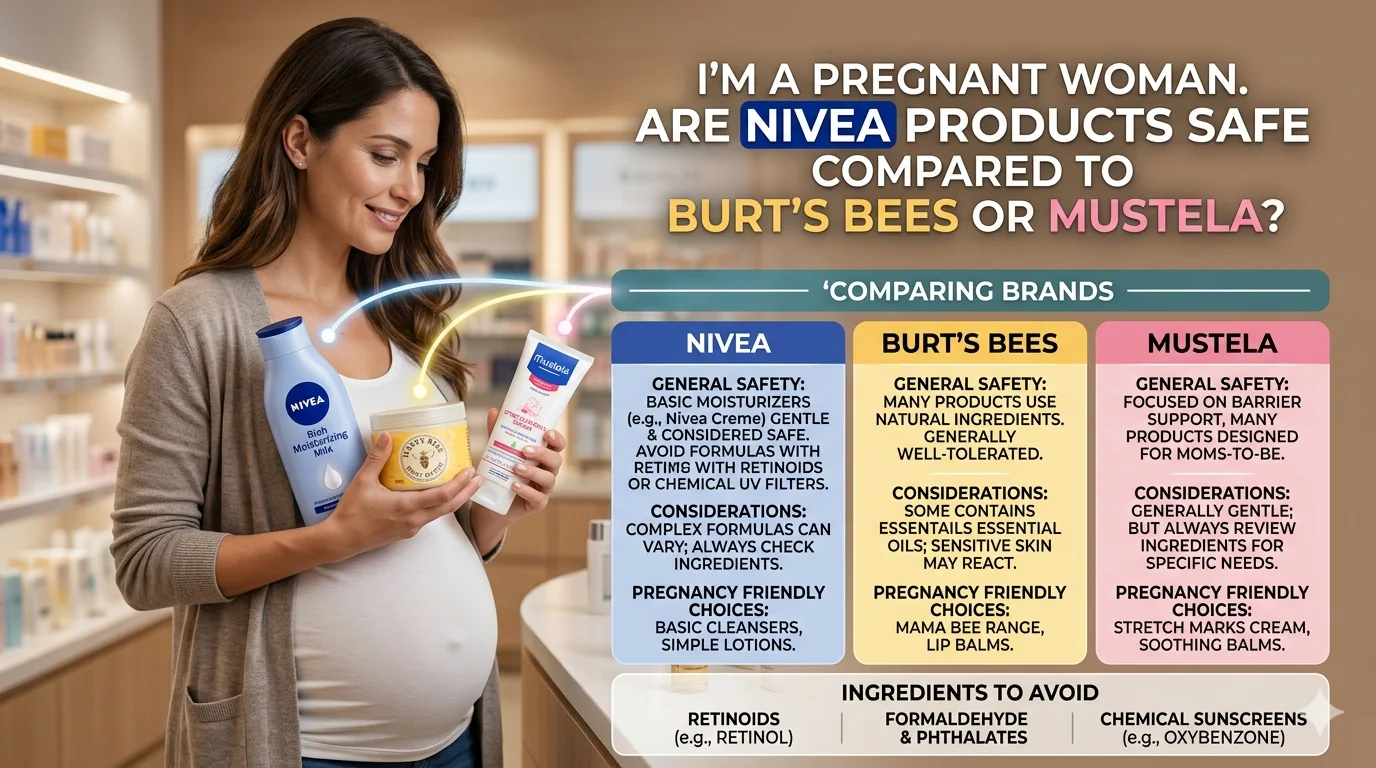
You walk into a store, stare at three familiar brands, and freeze. I’m a pregnant woman. Are Nivea products safe compared to Burt’s Bees or Mustela? This question stops countless mothers-to-be in their tracks. The honest answer may surprise you: brand names mean less than the ingredient list inside each bottle.
Why Pregnancy Changes Your Skin Dramatically
Hormonal surges during pregnancy affect your skin within weeks. Some women finally get that glowing complexion they always wanted. Others face sudden breakouts, dark patches, or frustrating dryness. Both reactions are completely normal because every body responds differently to rising estrogen and progesterone levels.
Your skin barrier function shifts during this time. It may struggle to hold moisture or become more reactive to products you used for years. This is why a skincare routine that worked perfectly before pregnancy might suddenly cause irritation.
The good news? You don’t need to throw away every product. You just need to know which ingredients support your changing skin and which ones pose potential risks.
Safe Skincare Ingredients You Can Trust
Many effective ingredients remain completely safe during pregnancy. Build your routine around these science-backed options rather than guessing.
Hydration heroes: Hyaluronic acid attracts moisture without any absorption concerns. Glycerin and shea butter lock that moisture in. Ceramides rebuild your skin barrier, which pregnancy hormones often weaken.
Acne and pigmentation fighters: Azelaic acid works safely at both over-the-counter and prescription strengths. Dermatologists recommend it regularly for pregnant patients dealing with hormonal breakouts or melasma. Niacinamide (vitamin B3) regulates oil production and calms redness without any risk.
Antioxidant support: Vitamin C serums brighten skin and fight free radical damage. Bakuchiol offers a plant-based alternative to retinol, working through similar pathways without the safety concerns.
Mineral sun protection: Zinc oxide and titanium dioxide create physical barriers that reflect UV rays. These sit on top of your skin rather than entering your bloodstream.
Ingredients to Avoid Without Exception
Certain ingredients carry enough concern that doctors recommend avoiding them entirely during pregnancy. Here is what to watch for on every label.
Retinoids (retinol, tretinoin, adapalene, tazarotene): These vitamin A derivatives appear in anti-aging creams and acne treatments. Oral retinoids cause known birth defects. Topical versions lack sufficient safety data, so doctors universally advise stopping them.
Hydroquinone: This skin-lightening ingredient absorbs significantly through the skin. Most dermatologists recommend avoiding it throughout pregnancy.
High-dose salicylic acid: Small amounts in wash-off cleansers are generally considered low risk. However, leave-on treatments and chemical peels with salicylic acid should be avoided.
Parabens: Studies link certain parabens to endocrine disruption and altered hormone levels during pregnancy. Choose paraben-free options when possible.
Phthalates: These endocrine disruptors appear in fragranced products. Research associates prenatal phthalate exposure with changes in placental gene expression and potential developmental effects.
Nivea Products During Pregnancy: What to Know
Many pregnant women reach for Nivea because it is affordable and everywhere. The brand offers both safe options and products you should skip.
Safe Nivea picks: Basic moisturizers like Nivea Naturally Good Chamomile Day Cream score well for pregnancy safety. Gentle cleansers including Nivea Hydrating Cleansing Oil work without harsh ingredients. Mineral sunscreens like Nivea Sun Mineral Face Cream SPF50+ provide physical UV protection.
Use with caution: Chemical sunscreen blends and brightening body lotions contain ingredients like butyl methoxydibenzoylmethane and octocrylene. Some doctors prefer to avoid these chemical filters as a precaution.
Avoid completely: Nivea products containing retinol or strong anti-aging actives should stay on the shelf until after delivery. The brand’s Radiant & Beauty Advanced Care Lotion falls into this high-risk category.
Bottom line on Nivea: Basic Nivea moisturizers and cleansers work well for many pregnant women. However, the brand spans too many product types for a blanket “yes” or “no.” Always check the specific product label before buying.
Burt’s Bees: Natural Branding vs. Actual Safety
Burt’s Bees looks and feels like a natural, gentle choice. The green packaging and plant-based ingredients create trust immediately. However, “natural” does not automatically mean “pregnancy-safe.”
Why this matters: Natural formulas can still contain strong essential oils, botanical extracts, and fragrance components. Some essential oils trigger uterine contractions or skin reactions during pregnancy. The brand’s natural image often makes people stop reading ingredient labels carefully.
Easiest Burt’s Bees products: Simple support items work best. Baby Multipurpose Healing Ointment, Ultra Gentle Lotion, and basic lip balms like All-Weather Moisturizing Lip Balm SPF 15 typically sit in the low-risk category.
Proceed with caution: Products leaning heavily on fragrance, essential oil blends, or treatment claims need more scrutiny. Strong botanical formulations may not be ideal for daily use during pregnancy.
Bottom line on Burt’s Bees: Use Burt’s Bees for basic support, not for active treatment. Simple balms and baby care products work fine. Avoid assuming every product with a leaf on the label is automatically safe.
Mustela: The Medical-Grade Approach to Pregnancy Skincare
Mustela takes a different approach than mass-market brands. Every product undergoes more than 450 safety tests and must pass dermatological and gynecological evaluation.
Safety credentials: Independent toxicology experts guarantee Mustela’s formulations. The brand specifically develops products for pregnancy and breastfeeding periods. Testing includes clinical studies on pregnant women, not just lab models.
Key ingredient philosophy: Mustela uses patented natural ingredients including maracuja oil concentrate and avocado peptides. These target skin elasticity and hydration without questionable preservatives. The brand’s stretch mark cream contains 97% natural origin ingredients and is free from parabens, phthalates, and phenoxyethanol.
What Mustela does well: The brand excels at simple body care, gentle cleansing, and barrier support. Products like Multi-Purpose Balm and Stelatopia Cleansing Gel rank high in pregnancy safety databases.
Bottom line on Mustela: Mustela offers the most medically vetted option of the three brands. However, even Mustela requires product-level checking. Sunscreen formulations, for example, should still be verified individually.
Brand Comparison Table: Nivea vs. Burt’s Bees vs. Mustela
| Factor | Nivea | Burt’s Bees | Mustela |
|---|---|---|---|
| Safety testing | Standard | Standard | 450+ tests, OB/GYN reviewed |
| Best for | Basic moisturizers, cleansers | Simple balms, baby care | Barrier support, stretch mark prevention |
| Risk areas | Anti-aging lines, chemical SPF | Strong essential oil blends, fragrances | Minimal (mostly low-risk) |
| Paraben status | Some products contain parabens | Mostly paraben-free | 100% paraben-free |
| Price range | $ (Budget) | $$ (Mid-range) | $$–$$$ (Premium) |
| Easiest product type | Body lotion, micellar water | Lip balm, baby ointment | Stretch mark cream, cleansing gel |
| Products to skip | Retinol lotions, brightening serums | Heavy fragrance formulas | None identified |
| Best for pregnant women | Everyday hydration | Lip care, minor support | Targeted pregnancy concerns |
Product Picks for Every Trimester
Choosing the right product depends on your specific skin concern and how far along you are.
First trimester (sensitivity is highest): Stick with the simplest formulas. Nivea Naturally Good Chamomile Day Cream provides basic moisture without irritation. Burt’s Bees Ultra Gentle Lotion works for body care. Mustela Stelatopia Cleansing Gel offers gentle cleansing for reactive skin.
Second trimester (stretch mark prevention starts now): Begin applying targeted products to belly, hips, and breasts. Mustela Stretch Marks Cream contains maracuja oil and avocado peptides specifically formulated for pregnancy. Burt’s Bees Mama Bee Belly Butter offers a natural alternative with strong user reviews.
Third trimester (maximum skin stretching): Focus on deep hydration and barrier repair. Nivea Rich Nourishing Body Lotion provides 48 hours of moisture. Apply morning and night to growing belly areas. Mustela Multi-Purpose Balm soothes particularly dry or itchy patches.
Sunscreen Safety: What Works During Pregnancy
Sun protection becomes extra important during pregnancy because hormonal changes make skin more prone to melasma (dark patches). Mineral sunscreens are the clear winner here.
Mineral options (safest): Zinc oxide and titanium dioxide create physical barriers. These sit on top of skin and reflect UV rays without absorption concerns. Nivea Sun Mineral Face Cream SPF50+ offers a budget-friendly mineral option. Mustela High Protection Sun Stick SPF50+ works for the whole family, including sensitive skin.
Chemical sunscreens (use caution): Ingredients like oxybenzone and avobenzone absorb into skin. Limited data exists on their safety during pregnancy. Most doctors prefer mineral formulas as a precaution.
Daily application rule: Apply sunscreen every morning, even when staying indoors. UV rays pass through windows and contribute to pigmentation issues.
Simple Daily Routines Using These Brands
You do not need a complicated routine. These sample regimens work for most pregnant women.
Morning routine:
- Gentle cleanser: Nivea Hydrating Cleansing Oil or Mustela Stelatopia Cleansing Gel
- Vitamin C serum (if using)
- Moisturizer: Nivea Naturally Good Chamomile Day Cream
- Sunscreen: Nivea Sun Mineral Face Cream SPF50+
Evening routine:
- Same gentle cleanser
- Targeted treatment: Mustela Stretch Marks Cream on belly, hips, breasts
- Body moisturizer: Nivea Rich Nourishing Body Lotion
Quick fix for irritation: Burt’s Bees Baby Multipurpose Healing Ointment soothes dry patches and minor skin issues without added fragrance.
Frequently Asked Questions
Q1: Is Nivea Creme in the blue tub safe during pregnancy?
Answer: Yes, original Nivea Creme is generally considered safe for pregnancy. It contains basic moisturizing ingredients without retinol, hydroquinone, or high-risk preservatives. However, check your specific tub’s ingredient list, as formulations vary by country.
Q2: Which brand is safest for stretch mark prevention?
Answer: Mustela leads for stretch mark prevention with clinically tested ingredients. Their Stretch Marks Cream contains patented maracuja oil and avocado peptides specifically formulated for pregnant women. Burt’s Bees Mama Bee Belly Butter offers a natural alternative with strong user satisfaction.
Q3: Can I use Burt’s Bees lip balm while pregnant?
Answer: Basic Burt’s Bees lip balms without strong essential oils are safe. The classic Beeswax Lip Balm and All-Weather Moisturizing Lip Balm SPF 15 sit in the low-risk category. Avoid heavily flavored or medicated versions without checking ingredients first.
Q4: Do I need to avoid all Nivea products with fragrance?
Answer: Not necessarily. Fragrance itself is not automatically dangerous. However, heavily fragranced products may contain phthalates, which are endocrine disruptors. Choose fragrance-light options when possible, especially for products used on large body areas daily.
Q5: Is Mustela worth the higher price compared to Nivea?
Answer: Mustela offers superior safety testing, including independent toxicology review and gynecologist-supervised studies. If your budget allows, Mustela provides more assurance for pregnancy-specific concerns. For basic daily moisturizing, affordable Nivea options work fine.
Q6: What if I accidentally used a product with retinol before knowing I was pregnant?
Answer: Do not panic. The absolute risk from topical retinol use is low, and most doctors say stopping upon learning of pregnancy is sufficient. Contact your obstetrician for personalized guidance. Avoid continued use going forward.
Conclusion
I’m a pregnant woman. Are Nivea products safe compared to Burt’s Bees or Mustela? The answer depends on the specific product, not the brand name. Nivea works well for basic moisturizers and cleansers but avoid their anti-aging lines. Burt’s Bees offers safe options in simple balms and baby care, but do not trust the natural label blindly. Mustela provides the most medically vetted formulations with dedicated pregnancy testing.
Your safest strategy is simple: choose fragrance-light products, check every ingredient label, and consult your dermatologist about any concerns. Pregnancy is not the time to experiment with active treatments. Stick with hydration, barrier support, and mineral sun protection.
Your next step: Pull out the three products you use most often. Flip them over and scan the ingredient lists for retinoids, hydroquinone, and high-dose salicylic acid. Replace anything questionable with the safe alternatives listed above. Your skin—and your baby—will thank you.